
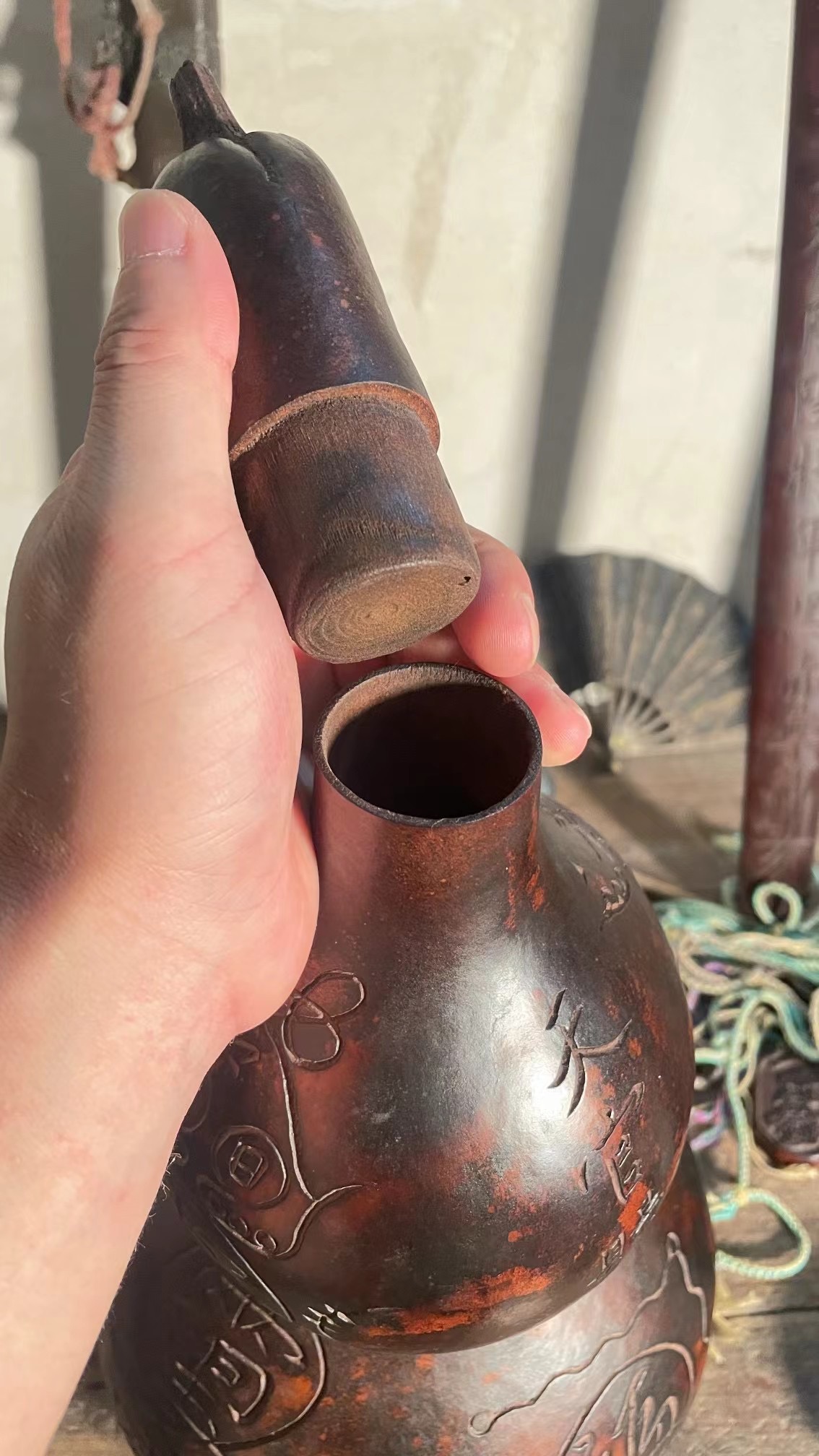
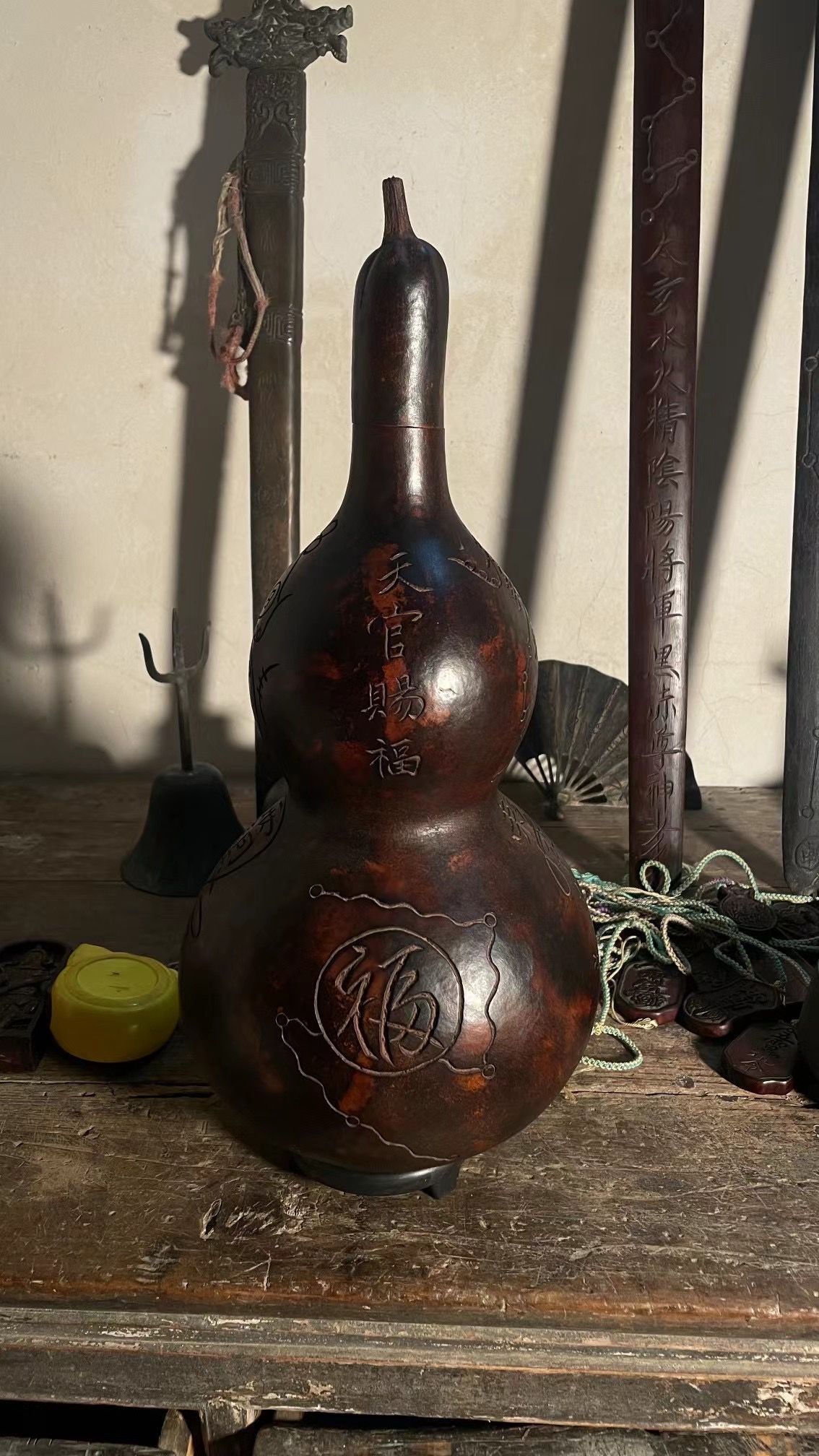
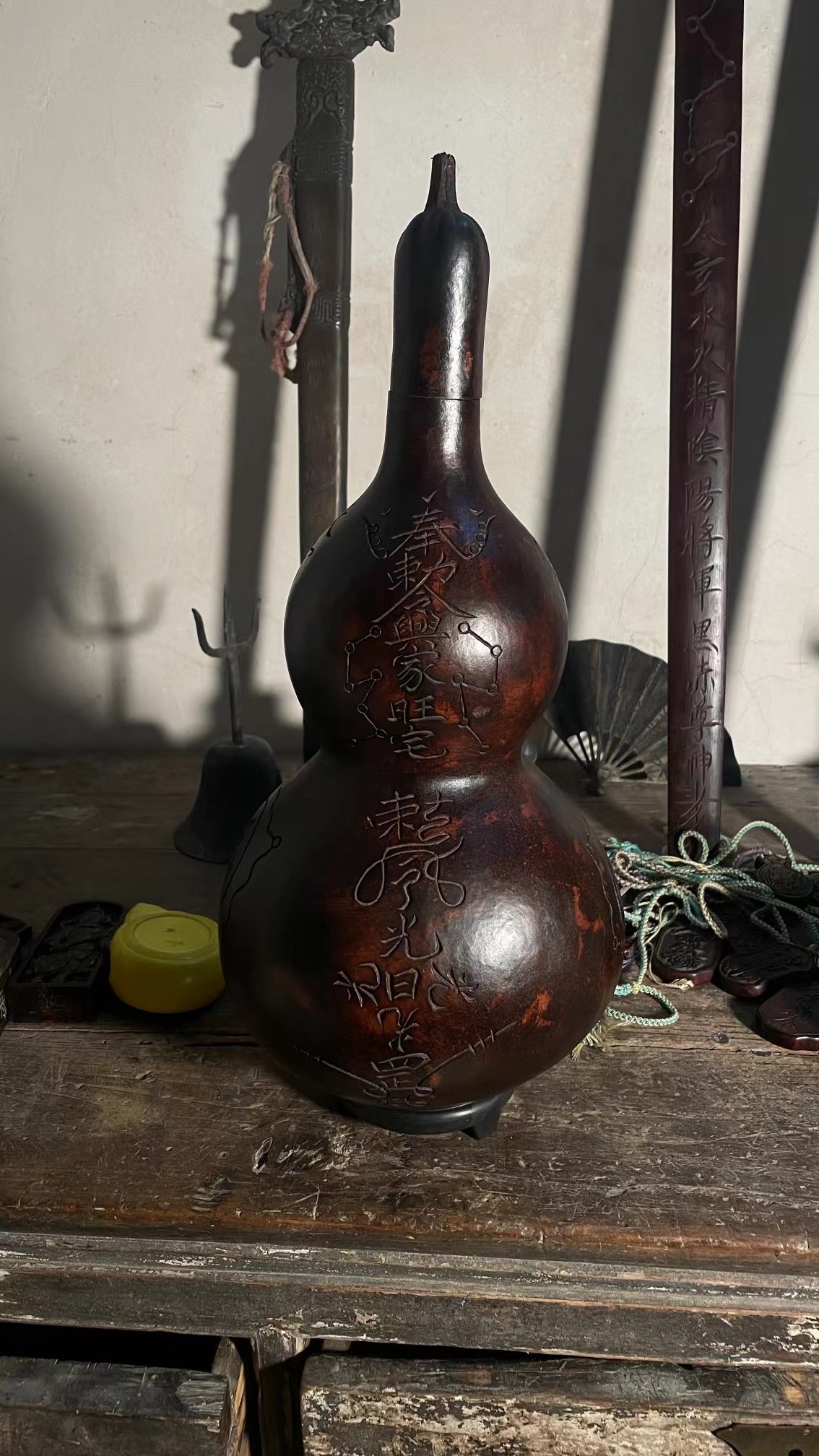
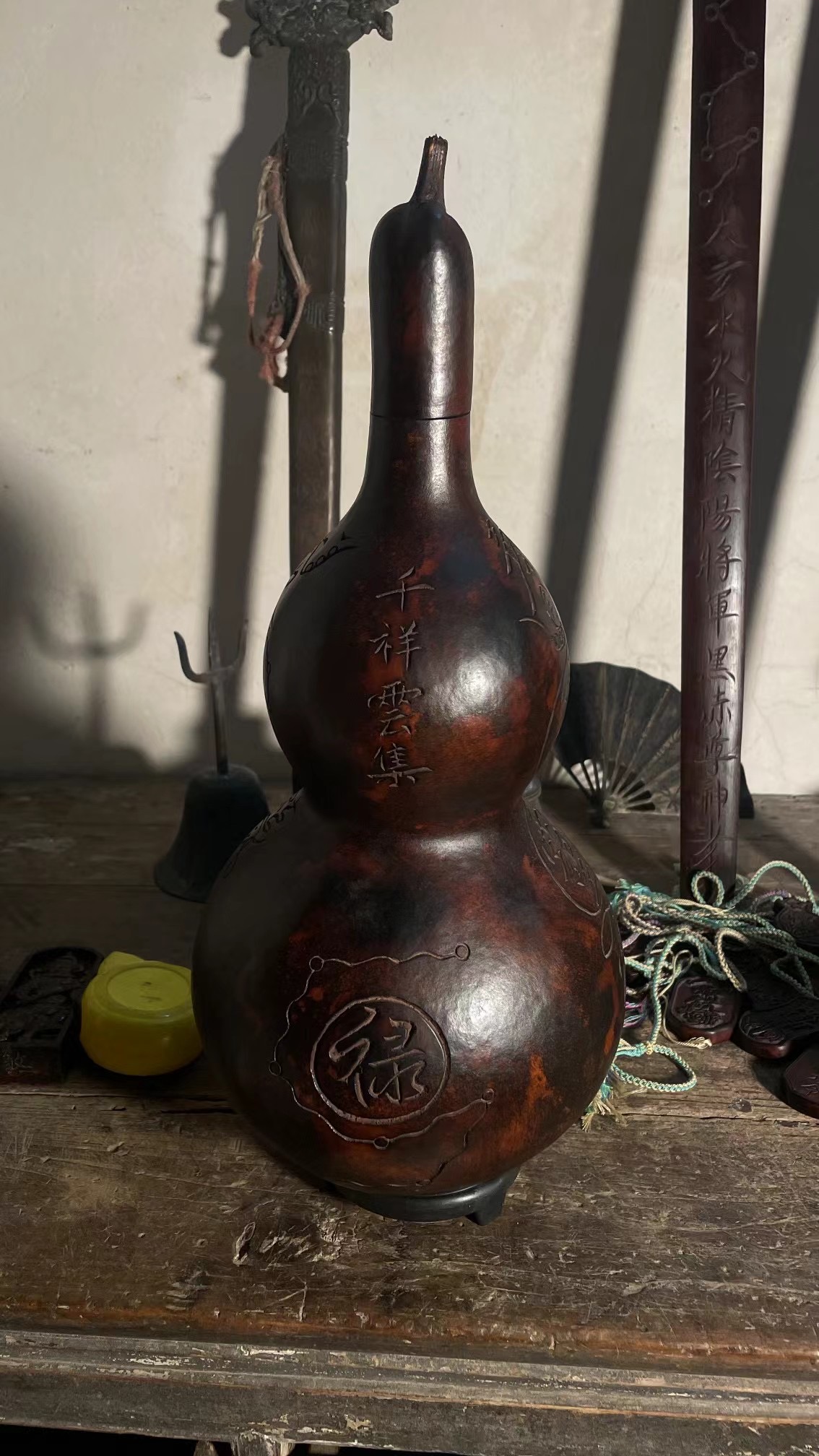
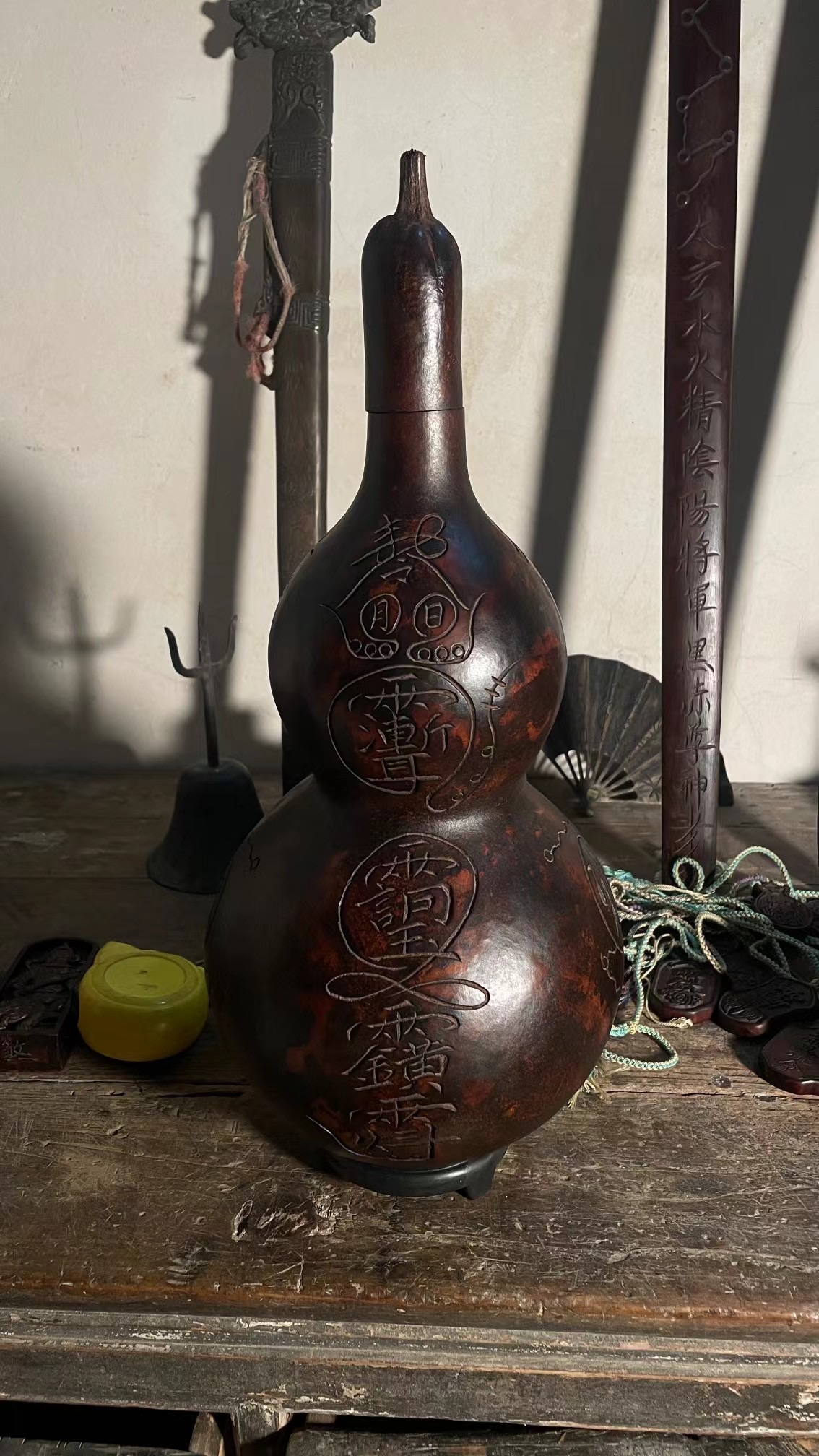
The gourd is a fruit that, after drying, can be used as a container. In Taoism, the gourd is adopted as a sacred tool, as well as a symbol for dispelling illness, warding off evil spirits, and representing auspiciousness.
Symbolism and Legends:
Dispelling Illness and Evil: The unique shape of the gourd, divided into two parts, symbolizes the balance of Yin and Yang. Moreover, the gourd is believed to swallow evil energy and store dew (the energy of sunshine), thus granting it the power to ward off evil spirits and cure ailments.
Emblem of Wealth and Longevity: The Chinese homophone for gourd, "Fulu," is associated with the imagery of wealth and longevity, making the Taoist gourd a symbol of such attributes.
Immortality and Alchemy: Taoist immortals often use the gourd as a container for elixirs or alchemy tools. Lu Dongbin, one of the Eight Immortals in Taoism, is famously depicted as an immortal holding a gourd.
Storing Spiritual Energy and Magic Power: In ancient Chinese myths, Taoist immortals and deities often store their magical powers, spiritual energy, or medicinal water in gourds for convenient access.
Famous Legend of "The Calabash Brothers": This legend tells the story of seven brothers, each possessing a magical gourd with unique powers. Together, using the supernatural abilities contained in their gourds, they battle against evil forces.
In summary, the gourd plays an essential symbolic role in Taoist culture, believed to have mysterious powers and magical implications. For thousands of years, the Taoist gourd has been widely used in Taoist rituals, Feng Shui, decorations, and as a sacred tool in various fields.
 Inquiry
 Inquiry
 Inquiry
 Inquiry
 Inquiry
 Inquiry
 Inquiry
 Inquiry
Copyright © 2026 By Taoist Treasures
 WhatsApp